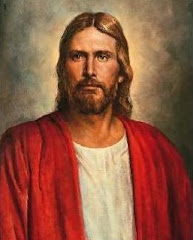
ENDURANCE
I was recently asked to speak in a sacrament meeting about the topic of Endurance and this is the gist of my talk. It represents my own thoughts and feelings about a topic that may of us do not concern ourselves with, preferring to take each day as it comes. I gave the topic thoughtful consideration and prayed about it and these are my conclusions.
1. Endurance is not a passive endeavor. Lehi, talking to his sons tells them: “And now my sons, I speak unto you for your profit and learning; for there is a God, and he hath created all things, both the heavens and the earth, and all things that in them are, both things to act and things to be acted upon.”
He continues to tell us: “Wherefore the Lord God gave unto man that he should act for himself.” When you think about these statements you come to the real conclusion - that either we act for ourselves or we are acted upon.
If we do not act positively to take charge of our daily life then we will be acted upon by every wind of circumstance that comes about, in which case life will HAPPEN to us. Even although we need to endure the struggles of our daily lives this does not mean just waiting for life to happen to us.
The word “act” is the prefix for activity, it is also the prefix for the word action. The Lord did not intend us to think that enduring means experiencing suffering in life without having any control over our eternal destiny or without our full participation. If we do not act and life happens to us and we complain and then shrug our shoulders as if to say well I guess I just have to endure it – or in other words to put up with whatever it is that causes us strain and stress and suffering then we are not enduring with faith because faith and action are one.
2. The true meaning of the word Endurance is not that we simply put up with life’s difficulties but that we continue in well doing in spite of life’s difficulties. It is that we continue to do good, that we persevere in living each day as righteously as we can. Remember the Lord’s teachings in his sermon on the mount, “Sufficient unto the day is the evil thereof.” Because of this we need continuous daily work to support our faith, daily reading and pondering of the scriptures, daily prayer, daily consecration to serve others and daily consecration or commitment to strive to acquire the virtues of a Godlike character.
Are we perfect? Perhaps in some things we are or can be perfect but without exception we are all deficient in something. Perhaps we lack compassion, or we may not be sufficiently patient, or we may lack virtue, our mind and heart may be unduly influenced by the world around us. Have we reached the full measure of a perfect man or a perfect woman? If not then we are still a work in progress and if that is the case then we have need to continue in practicing the principles of the Gospel of Jesus Christ. We have need to endure in faith.
Moroni asks us: “Have angels ceased to appear unto the children of men? Or has he withheld the power of the Holy Ghost from them? Or will he, so long as time shall last, or the earth shall stand, or there shall be one man upon the face of the earth? Behold, I say unto you, nay.” So, as long as we have breath we also still have a work to do.
The work of Salvation for ourselves is not yet finished. Neither is the work – our work – for the Salvation of our dead ancestors, neither is the work complete for our friends and neighbors, our acquaintances and our colleagues at work or our family at home. And because the work is not complete in any of these areas we are under the necessity of continuing in every good work and in every good thing – or in other words we need to endure in living a righteous life.
3. To illustrate my third conclusion about endurance I need to remind you of your childhood and mine. This week I saw two caterpillars crawling across the dusty road. A caterpillar is a little like a furry worm with lots of little legs. At some point in their lives these caterpillars will climb up a tree or settle on a leaf or on the side of a wall. And they will seemingly go to sleep. In a few days you will notice that they have covered themselves with a shroud and made for themselves a cocoon. Within this cocoon a marvelous transformation is taking place. First the caterpillar becomes transformed into a pupa then the pupa transforms itself into a beautiful butterfly. In course of time when the transformation is complete the butterfly will break free from its cocoon and fly away. It will only live a few days but by that point it has fulfilled the purpose of its creation.
We are the caterpillar and we are the butterfly. This life is the time for us to become transformed from a natural man or a natural woman into a Godlike man or a Godlike woman.
We all know the story of the impatient child who on learning that there was a butterfly inside the cocoon decided to help it get free and we all know or should know that doing so will actually destroy the very thing we want to set free. The reason for this is that nature has its own timetable. We cannot interfere with it. The cocoon which enables this transformation for us is the life we lead where we are continuously exposed to the influence of the Holy Ghost. It is within the walls of our home, it is here in the Church. It is in the Temple and it is in every place where we may be doing the work of the Lord or of being a good and worthy example to those around us. As we continue to live righteously like the caterpillar and the pupa we are gradually even imperceptibly transformed into a spiritual person.
As for the butterfly so also for us. If we break open the cocoon before its work is done and before the transformation is complete and do not endure in righteous living we will interfere with and cut short the process of our own spiritual development and perhaps also the spiritual development of those who count on us. Our Heavenly Father knows perfectly well what is necessary and essential for us to achieve perfection and in truth none of us will have completed that process even by the time we die – that work will continue after the grave. So we cannot sit back and think that the work is done – not when we are 7 years old, neither when we are 17 years old and not even when we are 70 years old. There is no retirement from living the Gospel of Jesus Christ.
As we are reminded once again in the book of Ecclesiastes, there is a time for everything under the sun, a time to live and a time to die and until that time comes when we lay ourselves down and close our eyes for the very last time in this life we need to continue in every good work. We have need to acquire by continuous effort the attributes of our Savior. We need to learn to love as he loves, have charity as he has charity, show mercy as he shows us mercy, extend patience to those around us as he extends patience to us.
We have need to succor and support and encourage those who are also engaged in this work and we have need to teach, testify and encourage those who have not yet started this process to do so. And if We have not yet started then We need to do so and then we need to continue and unwearyingly endure in righteous living to the very last day of our mortal life.
4. Endurance is the experience of the long distance runner. He is the one above all who knows that taking a break, making a detour and stopping for any reason may in all likelihood lose him the race. It is often the last door knocked on by the missionaries, the last stretch of the race which is the most challenging, the last minute for the food to cook or the cake to stay in the oven that makes all the difference. If we quit before our time is up and if we lose sight of the aim and purpose of our faith and hope, no matter how long we may have already endured – if we give up on our dreams, if we loosen our grip on the iron rod, if we stop relying on the arm of the Lord to save us, and if as a consequence we then lose our eternal hope and fail to complete our journey …………..just think how disappointed we will be.
5. Our lifetime is the accumulation of thousands of small moments, some enjoyable, some entertaining, some outstanding, some depressing, some filled with anxiety, some with shame, some with gladness and joy, some with sorrow and grief. We can best endure them one day at a time.
In conclusion:
1. Endurance is not a passive endeavor
2. Endurance means continuing unceasingly to do good, to live righteously
3. Endurance is essential for our spiritual development and for the
transformation of our character
4. It is the end result, the height of achievement that comes about after all
we have done that really matters and we can only taste that exquisite joy,
fulfillment and satisfaction if we endure in living righteously
5. We can best endure one day at a time
These are my conclusions about Endurance.
Sunday, 27 January 2013


Wednesday, 2 November 2011
The Thread of Hope (Part 1)
The thread of hope
To be or not to be - that is the question
Of all the things in life that are absolute and certain and completely unavoidable the most sure of all is that it will one day come to an end. Whether through accident, sickness, old age or design, at some point during our span of mortal life we must all sooner or later face this conclusion. It is an unavoidable truth for which there is no hope of avoidance.
For the vast majority of mankind death is the great unknown and what is unknown often gives rise to fear. In science what is unknown can be subject to investigation, through calculation, hypothesis, study and by experimentation. But death defies scientific method other than to prove the finality of the human condition called life. At death the functions of the body and the workings of the brain which govern those functions cease. While it is true that science has the possibility to maintain some physical functions so that the body does not decay and can monitor those functions, yet it cannot prevent the ultimate loss of life.
Once rigor mortis has set in and the degenerative processes of the body begun, the work of science cannot restore life to the human body. It is at this point when we must accept the fact of death. It is at this point when we must conclude that there is no hope for the restoration of life. For those who have no belief in or assurance of life after death it is the darkest moment in the life of those who live on because it is a moment utterly devoid of hope.
For the married couple whose partner dies the civil contract mutually entered into in life has also come to an end - married only "till death us do part". All that may have been obtained through hard work and great sacrifice over the years of life remains behind. All that is left are memories. There will surely be regrets for those things unaccomplished together, words spoken or left unsaid, issues that have not been resolved and actions that have caused offences and hurts unrepaired. For those who are fortunate terminal illness allows time and sometimes opportunity to prepare for the closure of mortal relationships. But the coming of death though inevitable is always unwelcome even if not unexpected.
The sting of death can be devastating. Broken hearts, grieving families, loneliness, a sense of helplessness, emptiness, insecurity and the fearful knowledge that sooner or later it too will visit again. Death also raises the question - what was the purpose of it all, if this is the finality? Without hope of a life hereafter there remains a sense of futility.
Hope springs eternal in the human breast
At times like this it is natural to question the meaning of life and even to reach out for some thread of hope that this is not the end - that there is something beyond this life which we can neither see, nor touch, nor feel, nor understand with our human abilities. The poet Alexander Pope in his Essay on Man wrote that, "Hope springs eternal within the human breast". It is only when we face death that life takes on new meaning and we seek to believe in what we cannot prove - that life continues beyond the grave.
It has been said that sincerity of belief alone does not establish the truthfulness of a principle and that being true then hope is not of any intrinsic value unless there are grounds to support that hope. If hope in a life hereafter can be considered then what basis is there for such a belief ? And what kind of life can it be if the body has been interred in the ground or the sea or burned ?
Death has been compared to the act of removing a glove from a living hand. The empty glove represents the body which is dead and has no life without the presence of a living hand. The suggestion of a living force, soul or spirit which continues to live externally of the body, however, raises more questions than it answers. If such an entity exists, where does it go after death ? And in what form? Where does such an entity come from? Does such a life form have an independent existence and if so what attributes does it possess? What is the purpose of mortal life if such a life may exist beyond the grave? Since all must die, will we recognize or be reunited at a time after death with those whom we have associated with in this life? What kind of association can this be? What or who governs the continuity of the lives of those who have lived in mortality and died? And there are many more....
Hope of a life after death can bring some form of comfort even without real or substantive proof of its reality, since many will grasp for anything that gives them some reason to believe that one loved and now deceased continues to exist, even if not in a physical presence. But, as we all know, unsubstantiated hope is a shallow foundation based as it is not on real assurance but on a bedrock of desperation to comfort and console the loss of one so much loved and now gone. For hope to be substantiated it is necessary for there to exist solid assurances or evidences, the testimony of infallible witnesses or better still, a means whereby hope can be transformed into a personal assurance - a personal reality.
To reach the point wherein hope of life in the hereafter can be transformed into reality there must be a genuine desire on the part of the one so seeking. The process of transforming such hope into reality begins with a determination strong enough to compel one to action - the action of faith. The exercise of faith is much more than an abstract hope for it is a motivating power. By faith we prove all things. By faith a farmer plants seed in the ground. There is no quantative assurance that his work will guarantee a harvest - anything can happen to prevent such from taking place, inferior seed, bad weather, infestation, marauding animals, extremes of temperatures, drought. All can, as it were, conspire to threaten the likelihood of a harvest, but trusting in what he cannot see and in hope of a positive outcome a farmer will nevertheless act in faith on his preceding hope. Scientists today invariably build on the work of those who have preceded them but in former times scientists were much more dependent on acts of faith built upon a hope of discovering a means to an end.
When the desire to hope is sufficiently strong it compels the human mind to believe in the possibility that the act of faith accomplishes.
Wisdom is justified of all her children
When we lose the companionship, love and friendship of someone whom we have loved and who has loved us we may feel devastated by the loss and overwhelmed with sorrow, not of finality but of uncertainty. If something is final there is no hope and no cause to hope but with uncertainty we cannot rule out that hope exists. No-one who has postulated that life continues in one form or another after death can rule out the possibility that such is the case. It may be something we cannot prove in a tangible manner but the act of faith can give assurance enough that something which is not tangible is still real.
The fact that we cannot see, touch, smell or hear an element of life does not mean that such does not exist. The air we breathe every moment of every day is proof of that truth.
Many things that we determine to be real, such as our emotions and feelings, love, anger, fear, etc. are real to us when we experience them but they are also not tangible.
We are also subject to imperceptible influences which have no physical substance. We all know that our bodies can feel cold or heat but again these feelings are not something we can actually touch or hold in the palm of our hand. Nevertheless, we acknowledge them to be real even though they have no material substance.
From time to time we get sick, the result of germs, bacteria and viruses invading our bodies, which though real are invisible to the naked eye.
Material life is comprised of elements both organic and inorganic - they differ in substance and in form but they all originate from the earth around us. We may take those elements and fashion them into whatever components we need to make our lives more comfortable and useful. We may discover new means and methods to use those elements for our benefit but at their origin those elements already existed. We may duplicate the works of nature - we may alter their molecular structures, but we cannot so much as create any entirely new and living species, not even a blade of grass, because we do not have the power to do so. As the words of a popular song so indicate "nothing comes from nothing, nothing ever could".
Even if we decide to break down the elements into their most rudimentary form they still exist. We may submit them to all manner of dissolution and dissect them; we may split the atoms and subject them to all manner of physical constraints. We may reduce them to the ultimate and smallest possible unit of existence but in reality nothing is ever entirely lost because in its nature it is eternal.
The elements which have formed and belonged to the human body may at death return to the earth as dust to dust or ashes to ashes but still, nothing has actually been lost. Even so called annihalation is merely the rearrangement of particles.
What then of the life that was there, with its intelligence, intellect, wit and memory? What of the personality, vibrance of spirit, attributes of character and affections and all of the other facets that made that person unique and which endeared us to that person, that constituted the soul of that individual? These are those things that are not physically tangible - to the human mind. Yet in our heart and mind they were real and they existed and constituted the person that was then alive even when not physically present.
Only when we stop believing in someone do they cease to matter and cease to exist but even then only in our mind and heart because that part of them that is eternal continues to live.
To have faith is to take hope one step further - it is to plant a seed in the heart. It is in its infancy to allow the idea to develop, to reason, consider and even believe - to the degree that the idea of hope takes root. When a seed is planted in the ground - if it is a good seed - it will with due care and attention begin to grow and when it has sprouted we know that the seed was good. The act of faith enabled by the planting has been brought to fruition and validated. What began in the shadow of doubt or even disbelief has now by the allowance of hope and by the act of faith been transformed into a living certainty.
To begin the process of transforming hope into reality we need to focus on the object that the act of faith can prove. Since the eternal nature of the spirit within man cannot be determined by scientific study and since a vague and uncertain hope alone in its existence is a concept too fluid to give grounds for belief, we must turn our focus to the one person whose life has been sufficiently documented and of whom independent testimony exists who both lived and who after death was seen and witnessed to be alive again.
Jesus Christ is that person. In the Biblical New Testament four separate authors proclaim and bear witness of the life, death and resurrection of Jesus. They independently confirm the testimony that the first to witness the resurrection was Mary Magdalene, followed by the remaining eleven apostles of Christ, two disciples who walked along the road to Emmaus and then later five hundred men. At the calling of a twelfth apostle to be witness of the resurrection with the other eleven the names of two additional men are mentioned as being also selected and one chosen to fill the vacant office. The apostle Stephen is recorded as having seen Jesus and his Father at the time of his stoning and later another person who had not only refuted the existence of a resurrected Christ but who had actively persecuted those who believed in him, namely Saul, whose name was changed later to Paul testified of having seen Christ.
But for many the happenings and beliefs of events that took place already over two thousand years ago are far away from modern day reality. None of us who live today can substantiate the truth of events that took place so long ago and around which a plethora of confusing dogma and liturgy have been created.
Notwithstanding the material evidences surrounding the life and death of Jesus Christ no tangible means exist to provide convincing proof of his life after death. The volume of historical evidences are sufficient to convince anyone of his existence beyond a reasonable doubt, but the same problem exists of his resurrection as for the convincing proof of life after death.
To resolve the problem of determining individually the veracity of the resurrection of Jesus Christ, however, we can resort to the same acid test as the farmer mentioned previously - that of planting the seed. In the same manner in which a scientist sets out a theory and then step by step builds up evidences and hypothesis, studies and draws conclusions that can be determined by practical steps,
so we can also in the same manner determine a practical manner in which to proceed on the basis of existing testimony and knowledge.
As hope can only be transformed into faith by action and as faith must have some evidence to support it so then we may turn to the question of who do we believe. In a court of law usually the testimony of two witnesses is sufficient to establish proof beyond a reasonable doubt.
Within the compilation of books that constitute the Bible, there are many which by way of direct testimony as well as by prophetic inference and parallels refer to Christ in both Old and New Testaments.
In order to create a foundation on which faith in Christ can be established it is appropriate to consider some of these.
The consequences of law
According to the Biblical record, after the creation, Adam and Eve lived in the Garden of Eden. There it is mentioned that they received laws and commandments from God, the transgression of which brought about a fall from their immortal state to a state of mortality, thus enabling the human race to be brought into existence. That the consequence of transgression of his laws was known to God is clearly understood through the verbal warning that he gave to them prior to this event taking place.
The Apostle Paul clarifies the purpose of Christ and his redemption of the human race by stating that as in one man, namely Adam, came the fall and with it death or mortality for all mankind, so through the atonement of one man, namely Christ, are all men redeemed from mortality at the time of the resurrection from the dead. (Romans 5 v.11-12, 18-19, 1 Cor. 15:22)
The obedience of laws, even in a secular society, provides benefits to those who maintain and keep those laws. That laws exist is a measure of the care and concern of society to ensure the protection and safety of its citizens. The breaking of those laws carries with it penalties - in part as a preventative deterrent but also to ensure that justice is maintained - so that thieves may not be allowed to take over society or that murderers should be permitted to take life without fear of penalty. The maintenance of law gives us ordinary citizens a measure of peace and security that we would not have in the absence of those laws or their deterrents. That they are intended for our benefit and to enable us to enjoy our lives and the freedoms we take for granted.
Similarly, we may reason that God`s laws have a similar albeit largely unrecognized purpose. And like the laws of human society those laws also bring with them both positive as well as negative consequences. In the case of Adam`s transgression of divine law the consequences were far reaching and yet not unpredicted. By the fall the way was opened for the human race to be born, but by the fall also man became born into a state of mortality, physical death being the ultimate consequence.
If we can believe that God is a being who is all knowing and all powerful as well as being infinitely wise and just, then it can be safely assumed that he would have known the consequences of the circumstances which led up to the fall taking place and also that he would have prepared a means for the effects of those consequences to be compensated.
Herein, however, lies a dilemma.
We can easily recognize that a simple, even insignificant infraction of a traffic law in our society can under certain circumstances lead to extraordinary and quite unforeseen consequences. A small error leading to a minor accident, may lead to terrible carnage, destruction and loss of life quite out of proportion to the original offence - just as also a minor engagement between two opposing military forces can lead to a full scale war into which allies and foes are drawn to participate on both sides.
After the accident is over and after the war is over entire issues relating to the whys and wherefores can be ascertained and where necessary compensation and restitution can be determined and loss of life accepted and friendships again rekindled. Justice, mercy and forgiveness are in great part those essential elements of society that permit reconciliation.
But, if by the transgression of one man comes into the world a state of mortality leading to the death of every single human being - how can justice, mercy and forgiveness bring about a restoration to life? Adam, although responsible for his own transgression of God`s laws could not possibly bear the impact of the subsequent transgressions of every member of the human race born into existence
which initially resulted from his actions.
It stands to reason that on the assumption that God is by nature a loving and nurturing Father of the human race then he would also provide a means for their redemption from death. Now the penalties of broken laws must be accounted for in this redemption equally as much as the exercise of means to overcome death and bring about a restoration of life. If Adam could not take upon himself the burden of the transgressions of the human race, seeing as he was only responsible for his own transgression, then each and every member of the human race must bear the weight of their own transgressions, seeing that according to justice that is also correct. No man can be responsible for the failings of another unless he has materially assisted him in the exercise of his free agency to commit such.
Clearly also, penalties demanded by justice for the far reaching transgressions of another cannot be laid upon the shoulders of those who were not responsible for their deaths seeing as their mortality was not of their own cause.
Herein lays the primary need of the human race for a Savior - one who can take upon himself to pay the price for the transgressions, not only of Adam but of all those, who through no actions of their own are born into mortality and subject to death.
That no ordinary human being is capable of bringing to pass the resurrection of mankind from death must be clear to every living soul. The sheer magnitude of the sum weight of all transgressions committed by man for which a penalty would have to be made available would have to be of eternal consequence. In other words, only an eternal being, a God, capable of death and having within himself the seeds of life could accomplish such a work. Hence the necessity that the Savior of the human race be born with dual attributes of immortality and mortality.
On this assumption and hope lies all Christian belief - Jesus, born by the miraculous means of an act of divine procreation having an immortal Father and a mortal mother. There need be no need to speculate on how this act was accomplished since the New Testament provides only information that Mary, the mother of Jesus was a virgin and that she was "overshadowed" by the Holy Ghost, one of the three members of the Godhood of Father, Son and Holy Ghost. Her husband to be, Joseph, being visited by an angel of God, it is reported "knew not" his wife until after her first birth.
The coming of a Savior to redeem mankind was known to the prophets of the Old Testament times and specific details of his life were proclaimed by them many thousands of years prior to his birth.
Threads of sacrifice
The principle of sacrifice has been one of the most enobling features of mankind from the very outset of the beginnings of the human race. The idea of giving up something of considered value in favor of anothers happiness and well-being sets man apart from the animals in addition to any other human characteristics. To surrender a part of ourselves, our time, abilities, our means and possessions and to do so with genuine feelings that come from the heart not only benefits the recipient but also enriches our own lives.
The first mention of Christ is by way of parallel or similitude and dates to the time of Adam and Eve, when it is told that their first born sons Cain and Abel made sacrifice. In Israel, anciently, a law of sacrifice was given only at the time of Moses, the Lawgiver but before that time frequent mention of sacrifice was made by the ancient patriarchs who preceded him. The mention of sacrifice, however, at the time of Cain and Abel had significance which is otherwise unexplained in the Biblical record but which may be deduced by reference to the events.
It is told that "Abel brought of the firstlings of his flock and of the fat thereof" to make sacrifice and his offerings were accepted by God but that Cain` s offering was not respected. This comment leaves the scholar to ask the question "why"? What distinguished the offering of Cain from that of Abel? In later times in ancient Israel sacrificial rites were determined by the giving of specific laws governing them. Their purposes were many but they all had one thing in common. They were to be clean and unblemished, signifying that they were to be of the finest quality and appearance, the best of their kind. The primary purpose of sacrifice was to be an atonement for sins.
This is in clear similitude to the sacrificial "lamb of God" whose propitiation for the sins of the world was to be made in generations far ahead of this time. That sacrifice existed as a law between man and God even at the time of Cain and Abel - one being acceptable to God and therefore defined by and in accordance with his instructions and the other rejected because it did not meet the proper form or serve as a similitude of its true nature, is understood by this passage of scripture. Sacrifice can have no appreciated value or worth if it is given with reluctance or given disparagingly, void of any real intent. For this reason Cain was told that "if thou doest well, shalt thou not be accepted? and if thou doest not well sin lieth at the door." Gen 4 v 7.
His rebuke is clear indication that he had foreknowledge of the correct purpose of the sacrifice but had no respect for it. Consequently his sacrifice could have no value since it did not meet the purpose thereof.
The next great similitude or parallel with the sacrifice of Jesus Christ and even more clearly understood is that told in the story of Abraham and Isaac, where Abraham was commanded by God to sacrifice his son Isaac. At the very moment when his compliance with this extraordinary deed by a faithful patriarch was to be done, it is recorded that an angel of God appeared to Abraham and stopped him - this had been the ultimate test by God of this man to prove his faithfulness and he had not been found wanting. In this similitude Isaac was already a young man. It is clear from the story that his sacrifice was a willing one and that he permitted his father Abraham to place him on the altar for this purpose in the absence of the usual sacrificial animal. But the place of this sacrifice is even more clearly a reference to the sacrifice of Christ - the mount of Moriah where this event took place was also known to be situated near to the place where the first and subsequent Temples were built in Jerusalem, the place later known as Golgotha, the place at which Christ was crucified.
Even the name Moriah signifies in the hebrew language "ordained by YHWH," which is the name attributed to God by the Jews. The inferences here are clearly and unmistakably a reference to this being a preordained place at which the ultimate sacrifice of God would be made in generations to come and that the sacrifice of the son of Abraham was in similitude to the sacrifice of Christ by his Father.
The writings of the Apostle Paul make known to the people of his day the importance and significance of the covenant between Abraham and God, a covenant and promise that through Abraham would all "the nations of the world be blessed." That this covenant would be fulfilled through the lineage of Isaac, the child promised to Abraham and his wife Sarah and not his first born son Ishmael born to his concubine Hagar, is revealed by Paul. He explains that the children of promise are therefore those who inherit the promises of Abraham and that these promises are continued not through the physical lineage of his son but through adoption according to the promise of faith in God because Abraham believed God and was obedient to him. He concludes that "if ye be Christ`s, then are ye Abraham`s seed and heirs according to the promise. "Galations 3
This same conclusion is made and preached by John the Baptist who is recorded as telling the Pharisees and Sadducees of his day: "And think not to say within yourselves, We have Abraham to our father: for I say unto you, that God is able of these stones to raise up children unto Abraham." Matthew 3 v 9. The Apostle John records that Jesus himself testified to the Jews also that "Abraham rejoiced to see my day and he saw it, and was glad" and when questioned by the Jews who mockingly said that he was not fifty years old and "hast thou seen Abraham?" he replied "Before Abraham was I am", the latter name "I am", being understood by them as a reference to the name of God for which they wanted to stone him for blasphemy.
The continuation of the Abrahamic covenant with God was initiated with the rite of circumcision which was a token of the covenant between the people of Abraham and God After the crucifixion of Christ the Apostle Paul referred to this as no longer being necessary because the law had been fulfilled in Christ. He told that circumcision was an outward token or sign of what needed to happen to the inner man and that without the change of heart that accompanied faith in God and his Son, Jesus Christ, the act of circumcision in itself was meaningless.
The threads of Moses
The life of the prophet Moses takes pre-eminence in the lives of the Jewish people, even to this day. Moses was the great lawgiver and at the time of his life the descendants of Abraham as had been foretold to Abraham, had been in captivity for 400 years in Egypt under the oppression of the ruling Pharoahs.
After many plagues had been poured out on the Egyptians because the Pharaoh would not agree to let the children of Israel go to worship their God, a final plague was sent upon all their households, after which Pharaoh did let them go - the death of the firstborn in every household of the Egyptians. This again is a symbolic reference to the future death of Jesus Christ - the firstborn son of God and the children of Israel were again given a new covenant - the passover, signifying that the angel of death would pass over the children of Israel and that they would be spared death by marking the doors of their homes with the blood of a lamb - sacrificed in accordance with the laws given by God through his prophet, Moses. How clearly this gives significance to that spiritual death which comes upon the wicked part of all mankind and how it may be passed over by all those who through compliance with laws given by God demonstrate their faith in the firstborn son of God through acceptance of his sacrificial atonement for their sins.
Prior to the institution of the passover God spoke to Moses and gave him specific instructions concerning the nature and manner of the sacrifice. The lamb was to be without blemish, a male of the first year - both signifying the nature of the later atonement - the lamb of God, Jesus Christ being without fault or sin and the firstborn son of God. Not a bone of the animal was to be broken signifying of Jesus Christ who at the time of his crucifixion was left without his legs being broken, even though this was the traditional manner of "finishing off" the victims so put to death.
The eating of unleavened bread is here instructed. Leaven or yeast was symbolic of corruption since its use causes the deterioration of the bread more rapidly. The use of unleavened bread was again a reference to the bread of life, namely Jesus Christ, who was perfect and without corruption.
Following the departure of the Israelites and their miraculous crossing of the Red Sea, they complained to Moses that they had no food and Moses turning to God for assistance was told that they would have food provided for them as long as they remained in the wilderness. The following morning they found on the ground a thin wafer like bread that fell from the skies each day - and this was called "Manna". When asked by the people what sign he would show them that they might believe on him they cited to Jesus the example of Moses and the bread that he gave them from heaven. Jesus replied to them and said: "Moses gave you not that bread from heaven; but my Father giveth you the true bread from heaven. For the bread of God is he which cometh down from heaven, and giveth life unto the world. And Jesus said unto them, I am the bread of life: he that cometh to me shall never hunger: and he that believeth on me shall never thirst." John 6 v 32-3
The act of eating and drinking is fundamental to life itself. Bread and water are representative of the essential elements without which human life cannot be sustained. The allegory by which bread is portrayed in these scriptures is in this vein representative of the essential nature of the teachings, example and atonement of Jesus Christ as the only means whereby eternal life may be obtained and sustained. Manna as given to the Israelites as they sojourned for 40 years in the wilderness was a literal food sufficient for their needs which came from heaven each day excepting the Sabbath day, whereas Jesus portrayed himself as the bread of life come down from heaven, signifying that by partaking of the spiritual food which he offered man could obtain eternal life.
The symbolism of bread and its relation to Jesus Christ is repeated many times in the scriptures and takes the place of circumcision as a covenant between man and God in the institution of the sacrament, being a token of remembrance of Christ and his sacrifice for man with the promise that he who partakes worthily of the sacrament will have his spirit to be with him and that God will dwell in him.
Notwithstanding the miracles that the Israelites saw performed at the hand of the prophet Moses, the parting of the Red Sea and their escape from the armies of Pharaoh, walking across the sea on dry ground, the water brought forth from a rock, the manna from heaven that would be sufficient for each day and enough for two days on the day preceding the Sabbath but at other times it would breed worms, the sight of the cloud and the light that shone as they were led by God and even hearing the words of God speaking to Moses from the cloud, it took only an absence of 40 days for them to call upon Aaron to make then an idol to worship in direct contravention of the commandments they had been given.
Consequently, the biblical record records that God was angered by their idolatry and Moses took the role of Mediator, pleading their cause, offering his own life and seeking the merciful attributes of God on behalf of the people that he also loved. These attributes reflect those of the Savior Jesus Christ whose atonement on behalf of the people of the world were the actions of a Mediator between man and God. Here, Moses actions reflect a similitude of Christ.
All of these earlier and subsequent Biblical teachings leave little room for doubt that these recorded events of history were intended to parallel the life and mission of Jesus Christ as Savior of the world and as the Son of God.
Wednesday, 6 July 2011
Human Values
Human Values
If I were to ask you to describe to what you would ascribe the most value of something that you possess you would probably think of the keys in your pocket which open the door of the house you own or of your motor car or motorbike. You might think of your cell phone or of another material possession which you own.
But in doing so you would overlook the one thing which is of far greater value – the human body. To give you some examples of the value of each individual body let us consider first our eyesight. A person who is six feet tall in clear daylight and having an unobstructed view can see a distance of about three miles with normal eyesight but on a clear night one can see the Triangulum galaxy which is approximately 3.14 million light years from our planet.
Working in perfect synchronization with our eyesight is our hearing. Sound is merely the result of our peculiarly shaped ears catching and interpreting the vibration of air molecules at a rate of anything from 20 times per second to 20,000 times per second. The cochlea is the auditory portion of our middle ear. It sorts into patterns and encodes about 30,000 auditory nerve fibers. Without the cochlea all sound would be just pressure waves echoing back into silence. Only through the miracle of hearing does sound take on meaning.
The skin is the largest organ in the human body. For the average human being the skin has a surface are of between 16 – 21 sq feet. The average square inch of skin has 650 sweat glands, 20 blood vessels and more than 1000 nerve endings. It has cells which serve to protect us from dangerous Ultra violet rays which can cause skin cancer and it contains self repairing enzymes so that when we are wounded or injured our skin miraculously begins a process wherein it repairs and restores itself.
In addition to our skin and all the other organs within our body the human heart would be thought of as of the greatest importance. The human heart however weighs only between 7-15 ounces (200-425g) and begins its miraculous function about 21 days after conception. The average heart will beat about 100,000 times in one day and about 2.5 billion times in a lifetime of 70 years. It serves to pump blood throughout the entire human body which gives it life through about 96000 kilometers of veins in the average human being.
Our body also contains the liver and kidney. The liver has many functions. Some of the functions are: to produce substances that break down fats, convert glucose to glycogen, produce urea (which is the main substance of urine), make certain amino acids (the building blocks of proteins), filter harmful substances from the blood (such as alcohol), storage of vitamins and minerals (vitamins A, D, K and B12) and maintain a proper level or glucose in the blood. The liver is also responsible for producing cholesterol. It produces about 80% of the cholesterol in your body.
The main purpose of the kidney is to separate urea, mineral salts, toxins, and other waste products from the blood. The kidneys also conserve water, salts, and electrolytes. At least one kidney must function properly for life to be maintained and we are all born with two for good measure.
If I was an authority on the human body I could no doubt speak in great detail how our body hormones work, how our body regulates temperature and produces symptons such as hunger and thirst, sweating and shivering, sneezing and coughing to identify the needs we have and the illnesses we diagnose. If I was an authority on the human body I could speak of the miraculous manner in which the reproductive organs function perfectly together with different male and female counterparts so that they together can perfectly reproduce another living human being after their own kind.
This is not to mention the miraculous manner in which our intestinal systems function, our skeletal and muscular systems, their parts and functions. This is not to mention the miraculous manner in which our brain directs our bodily and mental functions or our lungs and digestive systems or many other bodily parts and their functions, neither would it begin to describe how they all work in perfect unison to enable each human being to live and have their mortal experiences. And there are so many other features of the body which all have a divine purpose and necessity for the life of every individual.
My purpose is not to give you a long list of all the features of the human body. My purpose is simply to show how this body that we each have is the most precious and vital of all things that we possess and sadly the one thing of greatest value that we all take for granted.
In fact it is not until we fall ill or hurt ourselves or lose one of the organs or members of the body or come close to death that we realize just how important our body truly is. Sadly this is often too late. Which is why we should always do all we can to keep our body from getting infected unnecessarily or abuse it with illicit drugs or alcohol or tobacco or other harmful substances or defile it with impure sexual relationships or through adultery, fornication or self abuse.
The Holy scriptures reveal that in the beginning God created man and woman – in his own image, in the image of God created he him, male and female created he them. Even though thousand of years have elapsed since the time of Adam and Eve the human body is still a work of divine origin, a multitudinous miracle of divine engineering. Notwithstanding this incomprehensible work which we call the human body it will when it has fulfilled its purpose eventually grow old or sick and die and it will decay and return to the earth from which it was taken.
Yet, for the time of our mortal life, it is ours, a gift from a loving God which in every respect enables us to enjoy our lifetime experiences. Have we not great cause to praise God for the miracle of human life and to respect and follow his counsels to us concerning its proper use and functions?
Tuesday, 10 May 2011
FOCUS
Focus
Like many people that I know, I wear spectacles, or eye glasses. When I was about sixteen years old I noticed that my eyesight was defective and sure enough a visit to the opthalmologist and subsequent eye test proved that I had myopia or in other words shortsightedness and needed corrective lenses. I was prescribed corrective lenses which would enable me to see normally and since that time I have always needed to wear glasses.
Myopia is a condition of the eye where the light that comes in does not focus on the retina which is in the back of the eye. Because of this the image that one sees is out of focus when looking at distant objects but comes into focus when looking at a close object.
I don’t know the reason why I and many others have defective vision. I have read that there are many different varieties of myopia and I suppose that there are many reasons why I and others should be affected. The reasons perhaps don’t seem to matter now that I have been used to using corrective glasses for so many years.
I have noticed on reflection that many aspects of our mortal life have parallels with our spiritual life and condition. Just as without corrective lenses I cannot focus on certain physical objects it is also true that without corrective spiritual vision we also cannot focus on spiritual truths and objects.
Just as an eye test is necessary to exactly determine the degree of defect in physical eyesight, so also we can conduct tests to determine whether our spiritual vision needs correction.
If I do not wear corrective lenses I suffer from blurred vision, I experience headaches and my eyes ache because it is the natural tendency of the eye to attempt to stay in focus and when this is not possible the muscles surrounding the eye become strained.
In the course of my lifetime I have noticed that many people who have defective vision do not use corrective lenses. They get used to living with their defects. Their way of squinting and straining their eyes to look at distant objects or reading close-up, while inconvenient has become second nature to them and they do not notice that their vision is impaired even sometimes severely. It is equally possible not to notice ones spiritual impairments and to avoid taking measures to correct spiritual defects.
When our spiritual eyesight is impaired we fail to see that we are out of focus with the teachings of the Savior and his prophets, or with local church leaders – even our Stake President or Bishop.
Visual impairment such as myopia as much physically as spiritually causes us to see what we want to see and concentrate only on those things that are close at hand while ignoring the warning signs that reveal to us that we have need of corrective lenses.
Staying in focus is one of the most serious challenges of our daily lives. There are certain important things that we need to do to correct our defective spiritual eyesight. In order that we can then see correctly we need to study and read the words and teachings of the Prophets, Apostles and of the Savior. As we do so with sincerity and with a desire to correct our faults and defects he will reveal to us those aspects of our lives that are in need of correction. He will tell us in the sweet feelings of the spirit what we need to do and as we do so we find that our lives become conformed gradually to the point where we are once again in focus with his life, light and spirit.
The scriptures contain a partial history of God’s dealing with his children on two continents. Within the books of the Holy Bible and the Book of Mormon, God teaches us about his nature, his work, his creations, his laws and his plans for mankind. He reveals that he is a being of great love and devotion to his children, a being of great mercy and compassion, a God who cares for all his children. He reveals in the Doctrine and Covenants of the Church that the value of a human soul is great in his sight. Through his prophets he teaches us the way for us to live so as to attain to the greatest of riches, that of eternal life and so that we don’t think only in terms of a future world to come he reveals how we may enjoy an abundant life also on earth through obedience to his commandments.
The scriptures therefore contain an abundance of commandments which he has at different ages and times given to mankind, not all of which are actually relevant to us today but these nonetheless give us an insight into his divine character and the means he uses to accomplish his purposes. As we become familiar with the scriptures our focus on the nature and character of God is sharpened and our ability to trust in and love him is increased. Just as with the use of corrective lenses we can see more clearly so also as we focus on Christ and on the works of the Father our spiritual focus and understanding of life is sharpened and developed.
Sincerity of belief in our personal life is not in itself a defining witness that we have corrected our vision because sincerity alone does not establish the truthfulness of a principle. Only the witness of an unimpeachable character can do that and that character is the Holy Ghost who reveals to our heart and soul what truth is. To aid us in our desire to obtain a knowledge and sight of truth – or in other words to become in focus with the Lord and his Gospel we also need to communicate with him through the act of prayer.
Focus in prayer is as much an attitude as it is an action of faith. God, our Heavenly Father and his Son, Jesus Christ, are real beings. They love us and have done all in their power to provide us with an opportunity to experience mortal life and progress through obedience to their commandments so that we might develop their same characteristics and qualities. Their knowledge of us extends to our earliest times in the pre-existence and because our memory of that state is temporarily veiled from us we need to rely on them and receive from them light and knowledge, understanding and revelation with which to be constantly guided by them. In order that we can obtain these blessings we need to both qualify ourselves to do so as well as to pray and ask for those things of which we stand in need.
If we are trying our best to follow their divine guidance and live according to their instructions we therefore have no need to fear that our prayers will be not heard, rejected or answered. But sincere prayer requires us to focus on certain important matters. Firstly, we address our Heavenly Father, as the Savior taught us to do with humility, recognizing him as the creator of the universe and all that exists in the heavens and on the earth, worlds without number. He knows all things, even the thoughts and intents of the heart, so we need have no reluctance in approaching him. As a father myself I appreciate it more when my children express thanks to me for those things I have provided to them. A simple sincere thank you means a lot to me. But when children constantly come hands out wanting a freebie without a thought to spend enough time except to ask me for something I feel reluctant to spoil them and just give and keep giving without any consideration on their part for the value of those things they want or the means expended to provide them.
Focusing on prayer requires more than just kneeling or sitting down and closing ones eyes full of glee asking and asking again and again for what I want as if by magic it should just happen without any effort on my part. The Lord God does not promise to give us everything we want but he does recognize that we do have genuine needs. He also expects us to obtain what we want by our own efforts before we come to ask him for the desires of our hearts. We can at least let him into our plans and tell him what we have decided and ask for his blessing so that he might give us direction on how best to obtain it if indeed what we want is good for us. At a point in his life, Nephi was told by the Lord to build a boat to take him and his family across the ocean. As Nephi’s family lived in Jerusalem all their lives it is hardly likely that they had any experience in boat building.
But Nephi trusted in God and asked simply if He would direct him to where he could find ore to make the necessary tools. Noah also was told to build an ark without any prior experience of any such kind of huge venture and the Lord gave him knowledge on how to accomplish the otherwise impossible task.
When praying therefore, our focus needs to be as much on what we can do to earn the blessings that we desire as it is on what the Lord can do for us. Just because we do not get an immediate answer doesn’t mean that the Lord has ignored our request. The exercise of faith in prayer requires that we trust in Him and give him the time and opportunity to provide us with what we need.
We cannot always know what is best for us. There are many things we may feel would be good for us but even so we need to trust in the Lord. He alone knows what is good not only for us but for all of his children. Father knows best. Even Jesus when he prayed asked his Heavenly Father that “his will be done”. So should we! We are taught that “in patience possess your souls”. That is good advice. It is a thoughtless and selfish person who eagerly expects immediate answers to all his questions without doing much to obtain then. If we always got what we wanted when we want it God would be no more than a magician and our faith in Him would be unaided and undeveloped. It is good sometimes that we learn to focus on what we want, do the best we can to obtain it ourselves and then ask the Lord and then wait. Even the man blind from birth who Jesus cured had to wait while Jesus made clay from his spittle and put it on his eyes. As he began to see men as trees his faith and belief increased and he was able to have enough faith to be healed. It was not that the Lord lacked the ability to heal him instantly. So it is with us. The Lord works with us so that as we increase in faith our sight of spiritual truths comes into focus.
Ultimately our focus on the Savior should lead us to see as he sees, feel as he feels and love as he loves. The Apostle John wrote in this manner: “Beloved, now are we the sons of God, and it doth not yet appear what we shall be: but we know that when he shall appear, we shall be like him; for we shall see him as he is.”
As long as we need and wear corrective lenses we can see normally but when we remove them our sight again becomes defective and blurred. So it is in spiritual matters. We need corrective spiritual lenses just as we do physical ones. We cannot put off Christ and hope to retain 20/20 vision. The daily practice of faith is an essential discipline that makes us gradually whole. This includes regular daily prayers, daily individual scripture study and thoughtful application of Christ’s teachings and doctrines. It requires patient application of Gospel truths, trust in God’s powers to teach us through life experiences and also to apply to us the healing balm of Gilead that comforts and diminishes the pain, hopelessness and sorrows that we experience in life’s journey.
Tuesday, 11 January 2011
The Divine Cake
By way of analogy a divine cake is the result of using divine ingredients, even though the work of obtaining the ingredients, mixing, pouring and baking is the work of imperfect mortals.
Most of us have at some time in our lives eaten a cake. Many of us have also probably made a cake at one time or another. Basic ingredients are necessary for this purpose. Basic ingredients include flour, baking powder, eggs, sugar and milk. Other ingredients depend much on the type of cake we want and may include spices, pieces of fruit, flavorings, nuts, etc.
Making a successful cake requires a good and trusted recipe, proper preparation, good equipment for mixing and baking and of course an oven for baking, though with certain cookware you can use a pan. No part of a recipe can be ignored and it is essential to follow the instructions to get the best result. To make a good cake you also need to use the right amount of each of the specified ingredients. Baking the cake at the correct temperature and for the right length of time is also important.
I have tasted many cakes during my lifetime. I can tell the difference between a good cake and one that doesn’t taste so good. In some cases I have eaten cakes that were more like puddings, some with soft and squishy parts in the middle and cakes that didn’t rise well enough that were hard and unpalatable to digest. I have also experienced eating cakes that were burned on the bottom and those that had little or no flavor.
Normally it takes one who is experienced to make consistently good cakes and I am sure that that goes also for all other manner of cooking. Practice makes perfect. Some cakes are indeed heavenly – personally I like Devils food cake – a rich chocolate experience that stimulates the senses and satisfies the palette, melting in the mouth and leaving the soul wanting for more.
If I were God I would want every woman in the Celestial Kingdom to be able to make a perfect chocolate cake like the ones I so much love to taste, perhaps a little as sumptuous as the venison that Isaac loved and which his son Esau made so well for him.
But here the analogy I wish to make about cakes has its limitations. The purpose of this story is that a cake is the sum total of its parts. A good cake requires all the right ingredients and that you follow the recipe and instructions. The same is true in spiritual principles.
At the end of our mortal lifetime we will have become the sum total of our earthly experiences, thoughts and actions. What the end result of our characters will be will very much depend on the recipe we have used, the ingredients of our daily lives and the manner in which we have followed the instructions of the handbook of life.
Put more simply, we can only reap the harvest of what we have sown.
Ingredients are an all important part of this development – and they are equally important as are also the recipe instructions. We often think that it doesn’t really matter where the ingredients we use come from. But that isn’t true. It does matter. Only divine ingredients can produce a divine cake – and these ingredients are available to use only from divine sources. Just as with any ordinary cake, divine ingredients have a price. We can only obtain them from a divine source and to get them we must be willing to pay the price for them.
Just as it is also necessary to place faith in any recipe we follow we must be prepared to have faith in the divine instructions that are given to enable us to produce the divine cake. This faith is the basis for everything productive that we can accomplish and forms the foundation on which we make our cake.
Another important principle also concerns the recipe. If we want a cake we must use a cake recipe. We cannot use a cracker recipe and make a cake. It may seem obvious to us all but that is what many of us try to do. We may be satisfied with whatever we do but at the end of our day of life we will measure our life success by our performance. And it will show.
If the cake represents our lives then it is important how we make it and it is important from where we get the recipe that we use and it is important that we follow the right instructions.
I have eaten some half baked cakes. I have eaten some cakes with burned bottoms and I have eaten some cakes made without the right ingredients and I can state categorically that they don’t taste good, they don’t often look good and they don’t create the kind of satisfaction that comes from making a successful cake.
It is true that there is no accounting for taste. At the height of student revolts in Paris in 1969 the President of France at that time, Charles de Gaulle almost in despair raised the question, “How can you govern a country that has 365 different kinds of cheese?”
We can all choose the recipe we want – we can choose which instructions to follow and we can choose how we follow those instructions but one thing is absolutely certain. When the cake is ready it will be the sum total of its parts and if it doesn’t fit the divine pattern for cakes it will be rejected in favor of those that do.
Tuesday, 26 October 2010
Edukasyon Ang Solusyon
Edukasyon ang Solusyon
Here in the Philippines if you pass by a school or college of learning in any city or town you will doubtless see the phrase painted on a wall or printed on a poster, “Edukasyon ang Solusyon”, meaning “Education is the Solution”.
This is both a statement of intention as it is a practical ideal for raising the level of development among children, though it equally applies also to youth and adults.
I am sure that this ideal was written somewhere in heaven where all the children of God lived before this world was created. How do you take intelligent spirits which exist eternally and yet which are without understanding of eternal principles and laws and give them the means to rise above themselves and become as God is if not than by education and application? What better a way for us all to gain that knowledge than through the school of life?
Our education lies in learning truth, its realities, its benefits, its boundaries, its consequences and its glorious potential. That learning must be more than purely academic. Truth must be burned into the heart and soul of every man and every woman so that no other standard is good enough to replace it. Truth is a rock, a foundation, an absolute. Truth permits no shortcuts. It is consistent, unchanging, unyielding and undeviating and therefore completely reliable. Truth reveals error just as light reveals hidden things which were once in darkness. Truth will always prevail because truth endures forever.
Our birth is a matter of record and history. It is also an experience the like of which we will never have again. So is death. And so is everything that happens to us in our lives between these two points and so will be also the events that transpire after our death and at the time of our resurrection from the dead. But even if the greatest experiences of mortality are shrouded in past forgetfulness and future mystery the life we live will have provided for us a wealth of opportunities for learning truth and gaining an education which is essential for our eternal continuation.
At its most fundamental level the education we receive in mortality gives us the knowledge necessary for our survival, how to provide for our essential needs, how to differentiate between good and evil, right and wrong, how to communicate and interact with our fellow man, how to care for our environment including all the other species which are in part co-dependant on man for their survival. We learn by necessity the need for companionship and in time we learn also how to share our feelings so as to be able to show affection, to give and receive love and to form bonds of loyalty within the smaller and larger elements of the society in which we live and we learn also how to procreate.
Our learning provides the building blocks on which we construct a foundation for our lives; how we use those building blocks will largely determine the success and happiness of our individual lives.
Our learning is not without the benefits of history. One of the greatest benefits of all ages is the ability to retain knowledge of all other peoples that have preceded us. We can learn from their experiences, their mistakes and their failures, their successes and their achievements. Every successive generation has the same opportunities to receive an unparalleled learning from all previous generations.
In the history of mankind our generation has the greatest opportunity for learning than those which ever existed before and the same will be true for all future generations.
The ability of our generation to learn is unprecedented in the history of mankind. Never before has there been as much knowledge available in all spheres of life as there is in our generation.
Modern science allows us to peer into the depths of space so that we can see living history as it transpired millions of years ago, that’s how long it takes for light to travel. We are not afraid to dig tunnels and explore mines thousands of feet below the surface of the earth, neither are we afraid to climb and reach to the top of the highest mountains, the peaks of which are above the clouds. We have sent machines to visit the depths of the oceans. We have created devices that can even be implanted into the human body which are microscopic, to discover and witness the miracles of our living organisms and to relate that information to us.
Notwithstanding this fact, mankind still endures poverty, sickness and disease, physical and mental distress, agitations, hopelessness, anger, fear, selfishness, corruption, conflicts, wars, contentions and destructions.
We must ask ourselves the question WHY? Why, given all that we now have and all that the past has taught us do we still live through the most troubled times of all the peoples who have ever lived on the earth? In all the major cities of the world crime abounds, murders and assaults happen regularly, thefts take place in private homes and in the public arena, lies abound, dishonesty rules in the lives of so many; there is great inequality among the people.
What is it that our learning has not given us or that our education has not provided to us? What is it that we are missing if edukasyon ang solusyon?
An old legend tells that before the earth was created the Gods assembled together in a great council. They were concerned for their children, each of whom had the power of divinity within them and they were concerned that they might use these powers before they were ready. Where shall we hide these powers asked one? Another replied: “let us hide them at the top of the highest mountain.” Another said, “no, let us bury them in the depths of the earth, ”and another, “let us hide them in the depths of the sea.” But according to the legend the chief of all the Gods replied and said, “No, for sooner or later man will ascend to the tops of the mountains and dig to the depths of the earth and descend to the depths of the seas, and find them. Let us hide them deep in the heart of man, for that is the last place they will look for them and some will never find them.”
Today’s generation, like all those which went before it, are interested in the matters of the heart. Some believe that the key to the heart is love, for others power, for others material success, for others prestige. For some access to their heart is to be found in knowledge or in academic success, and for some it is enough to believe in God without seeking to know him and to live a generally good life of mediocre accomplishment.
With the aid of microscopes we can see the smallest organisms known to man. With the aid of telescopes we can peer into unknown space. Yet, we cannot see the simple fact that without faith in the living God we are blind even and also in the matters of the heart. Faith in the living God is the key to the matters of the heart and to all the powers of divinity which he has bestowed upon all of us who are his children.
At the time of my baptism at the age of 22 years in the Church of Jesus Christ of Latter-day Saints an elderly woman, sister Fordham, gave a talk. I don’t remember much of what she then said but I do remember that she quoted a scripture to me. ”….without faith you can do nothing.” D&C 8:10. In all my experiences in life I have found that this is true.
You can seek for all that is precious to you in life, whatever it may be. You can seek for love or riches, for wealth and prosperity, for health and vigor, for learning and wisdom, for fame and fortune, for beauty and the glory of self satisfaction.
But in the end, if you don’t have faith in God you have nothing, and you can do nothing.
You can build your foundation on science, on literature, on mathematics, on arts or even on computer software. You can build it on business success, on great fashions or brilliant designs, on landscaping or cooking or nursing or any number of a thousand professions or philosophies, but if you do not have faith in the true and living God who is Jesus Christ, you will find that sooner or later the shifting sands of time will erode your foundation and it will collapse.
Edukasyon ang solusyon – but with education get knowledge and with knowledge get understanding. Of all the advantages which exist in today’s world the greatest advantage that we can have of all is the knowledge that God lives. He has a purpose for you and me. It is God who has the solutions to all our problems, be they temporal or physical, mental, emotional or spiritual. If and as we allow his laws to govern us we can become whole. We can feel secure in all our righteous endeavors. His knowledge gives us light to guide us through the years of darkness – the darkness of the unknown unlived life. It is he who knows all things – whose education has advanced beyond that of mortal man and who knows everything that will enable us to gain a fullness of happiness and a fullness of peace. With his help we can obtain hope in life that is impossible without the knowledge of his purposes and his enduring love for us, his children. His knowledge is power – the power to lift and redeem man, fallen man, from his low estate, the power to raise us from poverty and from sickness and disease. He holds the power to remove all our sorrows and fears.
His truths, imparted to his prophets bring meaning and purpose into our lives. The education he is giving us is the greatest education we can ever hope to get. We shouldn’t neglect it. We shouldn’t waste this precious time. Time is of the essence.
Although we are cut off from his presence he will come to us if we have faith in him. He wants us to come to him for the greatest and most important schooling of all. He promises that if we have faith in him he will teach us by the power of his spirit. He has the power to take our earthbound minds and let them soar to the clouds of heaven.
Edukasyon ang Solusyon. But only if first and foremost we allow education to teach us Faith in Jesus Christ, which is the foundation of all worthwhile accomplishments in life. Once we have established this as the ruling principle in our lives everything else is possible.
Even though you cannot see him with your physical eyes you can learn of him and know him through those means that he has prepared - and that requires that you exercise faith in him. Faith is not to be confused with mere belief. As the Apostle James wrote, “…the devils also believe, and tremble.” Faith is the power that motivates to action and causes miracles to occur. Faith in Jesus Christ is demonstrated by the action of obedience to his commandments, not mere ritualistic performances but actions that come from the stirrings of the heart, actions that are centered in showing love for your fellow men, actions that demonstrate humility, actions that build strong homes and families and thereby strong communities and societies that care about one another. In such societies there is no inequality, poverty is done away with, sorrows diminish, joy increases and happiness is established. This is idealism at its greatest but this is not a mere dream. Faith in Christ is based on practical application of righteous living on an individual daily basis. And where does this faith begin?
It begins with education.
It begins with educating yourself about God. Jesus himself taught us this principle. “Ask and it shall be given you; seek, and ye shall find; knock, and it shall be opened unto you.” Matt 7:7. To know God is to know much more than his academic achievements. It is to know him, his character, his attributes of love, mercy, patience, virtue, kindness, justice. If we apply ourselves to seek him we will come to know him and to know him is to love him. But his is also a practical love, one that comes also with doing and as a result of doing – keeping his commandments, refraining from evil and staying free from temptations and sins. When mistakes happen as they surely do and will he commands us to take account of our actions, to become responsible for our own lives, to adjust our behavior and to cease doing those things that are harmful to our eternal happiness and progression – in other words, to repent, to change, to modify and improve our lives and to bring our life into conformity with his laws.
This education has the power to transform individuals and families, communities and societies. This education must begin with you.
You might ask; can one person make a difference in this world? The answer is yes, if that person is you. Each one of you can make a difference. But I am alone, you reply; I answer you that if you are on God’s side he will be on your side. God honors those who honor Him. And if God is on your side then you have all that you need to succeed in every righteous endeavor in your life. You will not be alone.
You will not find this education in monasteries, convents and seminaries. It is not to be found in institutions of secular learning or in libraries. This education is not to be found in the loud noise of bustling internet cafes or in shopping malls teeming with anxious souls desperately searching for material comforts.
It is to be found in quiet moments spent pondering Holy Scripture and in sacred moments while communing with God in prayer when speaking from the heart.
It is to be found not in the storm or the wind or the earthquake but in the still quiet voice that penetrates the heart while seeking answers to the questions of life.
It is to be found while listening to the voice of prophets who have been chosen by God to declare his words and to gather his people.
It is to be found while performing charitable works for needy people, while visiting widows, the sick and the aged.
It is to be found while comforting the weary and the despondent, the bereaved and the lonely, for while you are in the service of your fellow beings you are in the service of God and God honors those who honor him.
This education begins when you commit yourself to live according to his laws and commandments, to seek to know Him who is our creator, our eternal Father and true parent of the human race and to do his will rather than our own.
Saturday, 9 October 2010
The Pursuit of Happiness
I have noticed how often we speak from the pulpet about things that are close to our heart and which are important to us personally. I am no different than you in that respect and wish to speak about things that weigh upon my heart.
Life is full of twists and turns - some are part of our daily routines - some we can predict as the consequences of decisions that we make, and some are unexpected - but almost always they have some meaning to our lives and when we stop to consider what is important to us in this life, we cannot but help to notice that we can learn something from our every day which also affects the eternal purpose of our life.
Jesus taught, that "...where your treasure is, there will your heart be also." Matt. 6 v 21
The desires of our heart are generally the objectives of our life. So, if we can discover what we each want from life, we should be able to find out how to get there - how we can accomplish our goal and what kind of plan we need so that we can succeed. No one would go to sea in a boat that did not have a rudder - without one it is impossible to navigate in any direction, and likewise, everyone who wants to achieve a specific destination in life must have a map or navigation equipment, which will make it possible to plan the route.
I once asked a missionary companion, what was it that he really wanted out of life - what was the single most important thing that he wanted more than anything else. After quite some time in contemplation he replied: "I want more than anything else to be happy".
Happiness is surely everyones wish - the goal of every individual. How then can we achieve it?
If we know what will bring us happiness then we can decide to do everything that will enable us to obtain that happiness which we seek. Making the plan and following it through can be part of it.
If I were to ask different people what it is that would contribute to their happiness I think that most of them would say that good health is important to their happiness. It is certainly true - I can well understand how it must be to struggle and to have to live each day with physical or mental pain or anguish, or with the uncertainty as to whether this day will permit the possibility to live in health and peace of mind.
In addition we may add to the list of answers money. Money allows us to do so much. With money we can travel, we can buy a car, a home, clothes, food and almost everything else which is important to the human soul.
But happiness alone cannot mean as much to the individual, if they are unable to share it with others, often with one special person whose beliefs and aspirations are the same - and who can both give as well as receive love. So knows the person who has travelled alone and seen the miracles of nature and been unable to share the feelings of awe and wonder that fill their soul with another.
Love can bring to the soul more meaning that money or even health, and even if these other elements are missing, then the desire for love can become the most important of lifes aspirations.
The acquisition of happiness must include work - being able to do something and obtain accomplishment from it brings to the human soul a sense of satisfaction which cannot be obtained in any other way. So knows the person who has built a house and seen the final completion after the long efforts involved in its construction. Or, a sculptor, who has learned to skilfully create from wood, metal or other material something of beauty, or a dressmaker whose completed work fits well on the figure for whom it was made. Even an undertaker may take satisfaction from his work, which brings peace to someone at the end of a life and a place where their remains may be laid to rest for others to visit.
So many other factors also contribute to our whole picture of how we may obtain happiness.
But as we know, all of these above mentioned factors which contribute to our happiness in this life are not necessarily permanent. Health may fail, money may run out, notwithstanding the amount of time spent in its pursuit or even how much of it is saved. Love may grow cold in time if it is not nurtured enough or if ones partner even decides so unilaterally. Work may end or age press upon the individual so as to take the joy out of it or if strength to continue becomes impossible. Even the self employed may for one reason or another lose the opportunity to continue or the energy to struggle to achieve their goals.
Even the god of all gods, beauty, may fade. As one star once said: "We all lose our charms in the end." If the acquisition of happiness is our life goal, what then happens when everything for which we have worked, sacrificed and hoped, in the end brings no lasting satisfaction ? We can of course choose to escape from the reality of our situation. We can seek happiness somewhere else than from the acquisition of money or the security of a monogomous relationship. We might even give up working and live off social security - and there are always those who will maintain the fabric of society if we dont and if we wish we can receive all we want without giving anything back. But how much real satisfaction can be obtained by so doing ?
In life there is only one thing that is sure and certain ..............sooner or later, it will come to an end.
Well, you might say, so what - at least the journey was fun! And if it all ended there, we might feel satisfied and believe that the ends justify the means - our own happiness, whatever the cost!
Life is full of twists and turns and they have meaning for us and purpose as well. But, even though we may have fine dreams, beautiful plans and the desire to obtain true happiness, there is no guarantee that we will reach our objective if we just rely on our own knowledge and wisdom.
In his book "The Other Side of Heaven", John Groberg relates his own perspective as follows: "....I am sure that it is good, that we have better information, such as weather forecasts, raports, predictions, safety inspections, auditing, and such like, but I sometimes feel that we are too full of facts and numbers and possible dangers, so much so that we do less than we should. I suppose that we can all invent genuine reasons why we dont do anything because of possible dangers, such as not travelling somewhere because of a possible storm or we dont make some business solutions because we may be afraid of losses or litigation or we dont get married or have children because of possible physical, mental, social or financial reasons.
But it seems to me that the whole of life is one great risk and just for that reason we need faith. We do what is right, regardless of the consequences. God will help us, of that I am sure. We may have health problems or accidents, financial difficulties or difficulties with our family - at least we will become what God knows we need for our growth. If we protect ourselves from too much it seems to me that we may protect ourselves right out of the Celestial Kingdom."
We cannot know in advance everything that life will bring us. We cannot predict what tomorrow will be like - we cannot know what kind of house to build when we build it because we do not know if we will be safe from the dangers of the world, from hurricanes, floods, earthquakes, unexpected changes in the weather, let alone from rising crime and other hazards. We do not know when we marry if we will have healthy children or whether our spouse will stay with us through all of life`s disappointments, troubles and sorrows. When we are born into this world we do not know what kind of parents we will have, loving and caring or indifferent, sober or drunks - whether we will have a secure environment or one of violence and neglect.
For sure we dont know about tomorrow yet - it is still ahead of us, it is the unknown future. But there is one who knows everything. He knows every detail about us. He knew us before we were born into this world. He knows our strengths and weaknesses. He knows everything about our earthly circumstances from the moment of our birth. He even knows our thoughts. He does not desert us when we make mistakes and his love towards us knows no limits.
When we go down to the beach sometimes we may find it interesting to see what kind of stones have been washed up on the sand. Some of them have been in the sea for a very long time. They are usually of differing types of rock - different shapes, different colours - some of them have been in the water such a long time and have weathered a lot of turbulent movements of the waves. Many have been broken by the actions of the stormy currents. Nevertheless, it is surprising that always among the many different stones there are those which are almost as good and as beautiful as gemstones. They have suffered the buffeting of the seas and are washed up on the beach after having spent years in the waters polished by the abrasive actions of the water and sand. If we knew how much the sea had tested them we would be astonished that they had endured and survived the countless years of pummeling.
Life is like the sea and we are like those stones. God exists. He knows that we can become as precious and as beautiful as those gemstones, as strong and as pure even as a diamond but it has its price.
The price is the school of life. Everyone who lives must pass through it. And, there is no other means for us to graduate. Life is painful, for some it may be one long ordeal until death brings it to an end. Or, just when we think that we have been sufficiently refined by the experiences of the sea of life and reached the safety of the beach, along comes someone, sees us and sends us skimming back to the depths from which we came, where we must again be buffeted by sand and sea and refined even further.
Life is full of twists and turns. We all make mistakes - there is only one person who has ever lived and who lives who was and is perfect. Some mistakes are small and their consequences not so significant. Some mistakes are serious and their consequences cause us anguish and pain to the most extreme degree. We endure trials of all kinds, some as the result of our own stupidity, neglect or lack of desire to follow the guidance of our loving Father in Heaven. We are tried also as the result of the actions of others. We suffer. We dont want to suffer and when suffering continues too long and there seems to be no end to it we may easily become broken. Suffering is part of the refining process which makes of us valuable gemstones, eternally enduring and beautiful jewels.
From the first moment of our birth when we came forth from the safety and warmth of our mother`s womb we cried for longing. We suffered hunger and were able to drink milk from our mother`s breast and feel again what is is like to be nurtured in a warm and safe environment. We suffered also unpleasant feelings of discomfort until we were able to adapt to the new body we had received.
We suffered to be separated from our mother`s warmth and safety and we suffered tiredness from which only sleep was able to give us relief.
A tiny tiny seed contains within its core - life. It must be buried in the ground until the protection of the earth, moisture and warmth open its shell and there grows a fragile and delicate shoot. It must push out and upwards through earth many thousand times its own weight until it reaches the surface and can enjoy the light and warmth of the suns rays. Just as the seed suffers its birth and growth until it has sprouted and brought forth, so we too must suffer our growth and all its attendant pains, sorrows and hurts.
We can delay the process. We can complain and protest. We can refuse to participate. We can even withdraw from it, but no matter how much we do not want to suffer we must complete the school of life to the end. It is extremely difficult to complete life without acknowledgement, faith and trust in our eternal and loving Father in Heaven, who can protect and guide us, comfort us and give us strength to endure to the end.
Depending on how we look at it, life is either the greatest of eternal blessings and gifts or an eternal punishment and our companions in this life are all different stones which like us are in the process of refinement and which may be just in a different stage of progress than are we. If we permit and endure the storms of life trusting in our Heavenly Father`s love and care we can obtain from him strength and wisdom, albeit sometimes after the event, so that we can endure the processes different stages and difficulties - but, if we rebel against it and prevent ourselves and others from seeing it through to the end, we will unavoidably still have to go through the school of life and all its attendant trials and complete it to the end even if it takes a thousand years. If that happens, we may lose the possibility of participation when new worlds are born and new generations brought to be refined.
Life is unavoidable, but the action of its sea is much easier when we realise that it all has meaning.
Everything has a purpose and we are not alone unless we so choose. Fighting against it is futile and wastes so much time and needlessly consumes so much energy, which we need to endure the storms and the unpredictable events of life.
I testify that God lives. He loves us and he is always aware of each one of us. He knows all our joys and all our sorrows, all of our happiness and all of our tribulations. He is always willing to help us if we will trust in him and to comfort us and give us strength to endure the difficult times.
He has an eternal gps system. It may be miraculous to us but he can locate us in a second no matter where on this earth we are. We need only to extend to him the invitation.
Friday, 13 August 2010
The Straight and Narrow Path
We all know that the shortest distance between two points is a straight line. With that knowledge in mind, we should not be surprised if according to the teachings of the Saviour, “…strait is the gate, and narrow is the way, that leadeth unto life, and few there be that findeth it.” Matt. 7 v. 14. According to the prophet Nephi, “…the way for man is narrow, but it lieth in a straight course before him…”2 Ne 9 v. 41.
Nephi also quoted the words of Lehi, his father, who said: ”Prepare ye the way of the Lord. and make his paths straight; 1 Ne 10 v.8 and various other prophets who taught and testified of Christ also spoke of the strait way to eternal life. The prophet Alma when speaking of the Liahona which Lehi had received said that: “…it is as easy to give heed to the word of Christ, which will point to you a straight course to eternal bliss, as it was for our fathers to give heed to the compass, which would point unto them a straight course to the promised land.” Alma 37 v. 44
Later, in the times of the Nephite peoples, Helaman, the son of Alma also taught : “…that whosoever will may lay hold upon the word of God, which is quick and powerful, which shall divide asunder all the cunning and the snares and the wiles of the devil, and lead the man of Christ in a strait and narrow course across that everlasting gulf of misery which is prepared to engulf the wicked.” Hel. 3 v. 29
Other prophets including Isaiah preached to “make straight in the wilderness a highway for our God” and John the Baptist also taught to “make his paths straight.” Ironically, when Saul was blinded on the road to Damascus, Ananias was told by the Lord to visit him and restore his sight while he resided at the street which is called Straight. I can think of no other reason why it would have seemed appropriate for the street name to be mentioned if there had not been some significant connection with the ways of the Lord.
In common terminology we refer to someone who has served time in prison and is in the process of being reformed, that he is “going straight”. And even those who adopt an alternative homosexual lifestyle refer to those who are not of their inclination as being “straight” as opposed to being “gay.” In hospitals and in prisons violent persons who will not allow themselves otherwise to be subdued may be obliged to wear a straitjacket, which restrains their movements and restricts their freedom.
But if the word straight has significance for us according to the teachings of the Saviour and of his prophets, today the word straight is more often used as a derogatory term for those who choose to live in accordance with values with which they do not wish to associate. Perhaps for this reason so many turn away from “the strait and narrow path, which came along by the rod of iron, even to the tree by which I stood;” as testified by both Lehi and Nephi, for we read that after they had tasted the fruit they were ashamed, because of those that were scoffing at them; and they fell away into forbidden paths and were lost.” 1 Ne 8 v 20, 28
In the scriptures there are two words which are used in phrases in connection with the word narrow but which in fact have separate meanings. The word “Strait,” which is spelled S T R A I T, means narrow, tight fitting or restrictive, and the word “Straight,” which is spelled S T R A I G H T means direct, or in a direct course.
Most of us, when we buy clothes ensure that they fit us well enough so that we will feel comfortable wearing them. If our weight and figure change we may, however, find it necessary to make repairs or adjustments to our clothing garments so that they are either enlarged or reduced according to our weight and size. By so doing we ensure that we have well fitting clothing which suits our purposes and needs.
Similarly we often find that certain aspects of our daily life need adjustments so that we can feel happier, more secure and more comfortable with our desired way of life.
The Lord, however, does not make adjustments to the way of life that he teaches us is necessary for us to obtain eternal life and happiness. We cannot enter into HIS way and into HIS straight and narrow path and start to make adjustments to suit OUR desires and feelings. While road repairs may be necessary in this world with repeated necessity, his way needs no such adjustments, repairs or alterations. Rather, he expects US to adjust our lives so as to fit into the strait and narrow path that he has led us into. His path has strict and unalterable parameters.
Any exceptions or deviations to his laws which would unfairly favour one individual would mean that he had become a “respecter of persons”. The scriptures, however, tell us that God is “no respecter of persons” and that “all are alike unto him.” This undeviating principle ensures that there is no corruption in the Kingdom of God. Whether a man is a Prophet, Apostle, Stake President, Bishop or just a regular rank and file member of the church, he is subject to the same laws and same judgments. His participation of life within the confines of the straight and narrow path is the same as that of any ordinary member and as a result we are all equal – we all enjoy the same freedoms and privileges of membership in the Kingdom of God and we are all bound by the same duties and responsibilities of obedience to the laws of God.
The Lord has allowed for the capacity of the weakest of those who are or who can be called Saints – or followers of Christ and the same obligations for membership in his kingdom are for rich and poor alike, for the well educated and the simple. The laws of God are the same for all regardless of nationality, race, age or colour.
It is true that the strait and narrow path inevitably means that we must make adjustments to some of our habits and occupations. Keeping the Sabbath day is one such commandment. While the world largely accepts all kinds of activities and work on the Sabbath day, we, the members of the church must accept the restrictions that the Lord has made to activities on this holy day. Likewise, whereas non-members of the church may have no calms about consuming alcohol, of whatever variety it may be, the word of wisdom, which is of such great value and such a great blessing to us individually, has been given by way of commandment to the church and it is incumbent upon us to obey it in both the word of the law as well as in the spirit of the law and totally refrain from any such beverage or foodstuff, tobacco, drug or intoxicant which is contrary to this law.
In terms also of morality non-members of the church may accept practices which are far from those taught us by the Lord. As members of the church we are required to live lives in which we observe strict moral practices and strict virtue also. This refers not only to sexual abstinence outside of marriage but to a code of appropriate conduct including our standard of dress, not only in public places but also at home.
These and many other aspects of the Gospel set us apart from those who have not made covenants with the Lord and who are not therefore members of his church and kingdom.
This life is described by the Book of Mormon prophets as a preparatory as well as a probationary life. In the justice system maintained by civic governments a person who is on probation is one who has offended the laws of society. He must submit him or herself to the watchful eyes of the local authorities to ensure that he does not re-offend and break the laws again. In the Kingdom of God we are under covenant obligation to maintain the laws of the Lord and where we offend them even in the smallest degree we are required to change our behaviours, to refrain from speaking or behaving in any way that places us on the other side of the straight and narrow path. The Lord has said that he cannot accept sin in the least degree but he also understands that we cannot all become perfect at once and that keeping his commandments may be far easier for some and far more challenging for others.
Our need for constant reflection and observance of our thoughts, desires and feelings, of our actions, those which are recreative as well as those in our employment, actions of service and the motivations which govern our daily lives, all need regular and sincere recommitment to the principles of the Gospel, so that little by little we can improve the measure of our faithfulness, respect and obedience to God and to his laws.
God is merciful and he loves us. His patience extends almost to infinity but there is a time limit within which we each need to learn obedience to the principles and truths of his Gospel.
While the rigors of living a confined and very self regulated life may be challenging, frustrating and at times filled with personal inadequacy the Lord in his wisdom has given us responsibility for each others welfare. We are to teach the principles of his Gospel regardless of the fact that we are ourselves imperfect. Learning by doing is the only way that we will gain sufficient experience to appreciate the need to remain within the boundaries of the straight and narrow path and to learn of his wisdom and love for us.
At the same time, we can see opportunities to serve others, to support them in their trials and tribulations and in their sorrows and to learn to love those who like us have weaknesses and who from time to time exhibit failings that we may have also had to meet and overcome or perhaps still be struggling with. We can comfort and encourage one another.
While working our way through the straight and narrow path towards a celestial goal there may be pressures, hurt feelings, anger, frustrations, criticisms, judgments and even at times hypocrisy among us, but the Lord commands us to put aside our differences, forgive our faults and be compassionate to the weak and he also warns us: “”Judge not, that ye be not judged. For with what judgment ye judge, ye shall be judged: and with what measure ye mete, it shall be measured to you again.” Matthew 7 v. 1-2. He pleads with us to forgive the sins of our neighbours and he commands us plainly: …let every man esteem his brother (or sister) as himself.” D&C 38 v. 25
The straight and narrow path that leads to Celestial glory is not one that is easy and uncumbered but at times it is one that is strewn with the debris of failings and foolishness, neglect, lost opportunities and missed blessings. It is nevertheless, the Lords way. It is his path and he has shown us the way. While we may in this life have to make a lot of sacrifices to enter into the straight and narrow path and stay within its confines we are given promises of eternal glory and eternal progress and happiness for so doing. During our time spent struggling to adapt to the Gospel of Jesus Christ, during our constant repentance and continual service, during our study of his words and teachings, we learn from him directly and he reveals himself to us
by the power of the Holy Ghost so that we gain light and joy, hope and increase of knowledge, faith and desire. What seems to be impossible becomes not only possible but also brings us great happiness. I so testify
Subscribe to:
Posts (Atom)